macOS App Development
TidyImage
TidyImage is a native macOS application GrandWorks built to solve our own image workflow problem, then turned into a commercial product. We built the full stack: the Mac app, a Stripe-based licensing system, user accounts, team seat management, and an admin panel to run it all.
" height="230px" id="ZDAlbcklo" width="230px"/><g d="M 83.896 89.451 L 66.336 89.451 L 66.336 8.816 C 66.336 3.938 70.258 0 75.116 0 L 126 0 L 126 17.632 L 83.896 17.632 Z M 59.664 90 L 42.104 90 L 42.104 42.12 L 0 42.12 L 0 24.488 L 50.884 24.488 C 55.742 24.488 59.664 28.426 59.664 33.304 Z M 59.664 0 L 0 0 L 0 17.632 L 59.664 17.632 Z" fill="transparent" height="89.99999923523374px" id="ypa5yQXXV" transform="translate(52 70.5)" width="125.99999956288684px"><path d="M 17.56 89.451 L 0 89.451 L 0 8.816 C 0 3.938 3.922 0 8.78 0 L 59.664 0 L 59.664 17.632 L 17.56 17.632 Z" fill="rgb(255, 68, 0)" height="89.45145842403127px" id="qiUY09PCz" transform="translate(66.336 0)" width="59.66367296376575px"/><path d="M 59.664 65.512 L 42.104 65.512 L 42.104 17.632 L 0 17.632 L 0 0 L 50.884 0 C 55.742 0 59.664 3.938 59.664 8.816 Z" fill="rgb(74, 121, 249)" height="65.51153678711363px" id="ZnZbfhD2U" transform="translate(0 24.488)" width="59.66367296376575px"/><path d="M 59.664 0 L 0 0 L 0 17.632 L 59.664 17.632 Z" fill="rgb(236, 178, 245)" height="17.631693513278194px" id="s4CyMlRm3" width="59.66367296376575px"/></g></svg>)
Client
GrandWorks
Industry
Productivity Tools
Solution
MacOS App, Licensing, Backend
A Tool We Needed, So We Built It
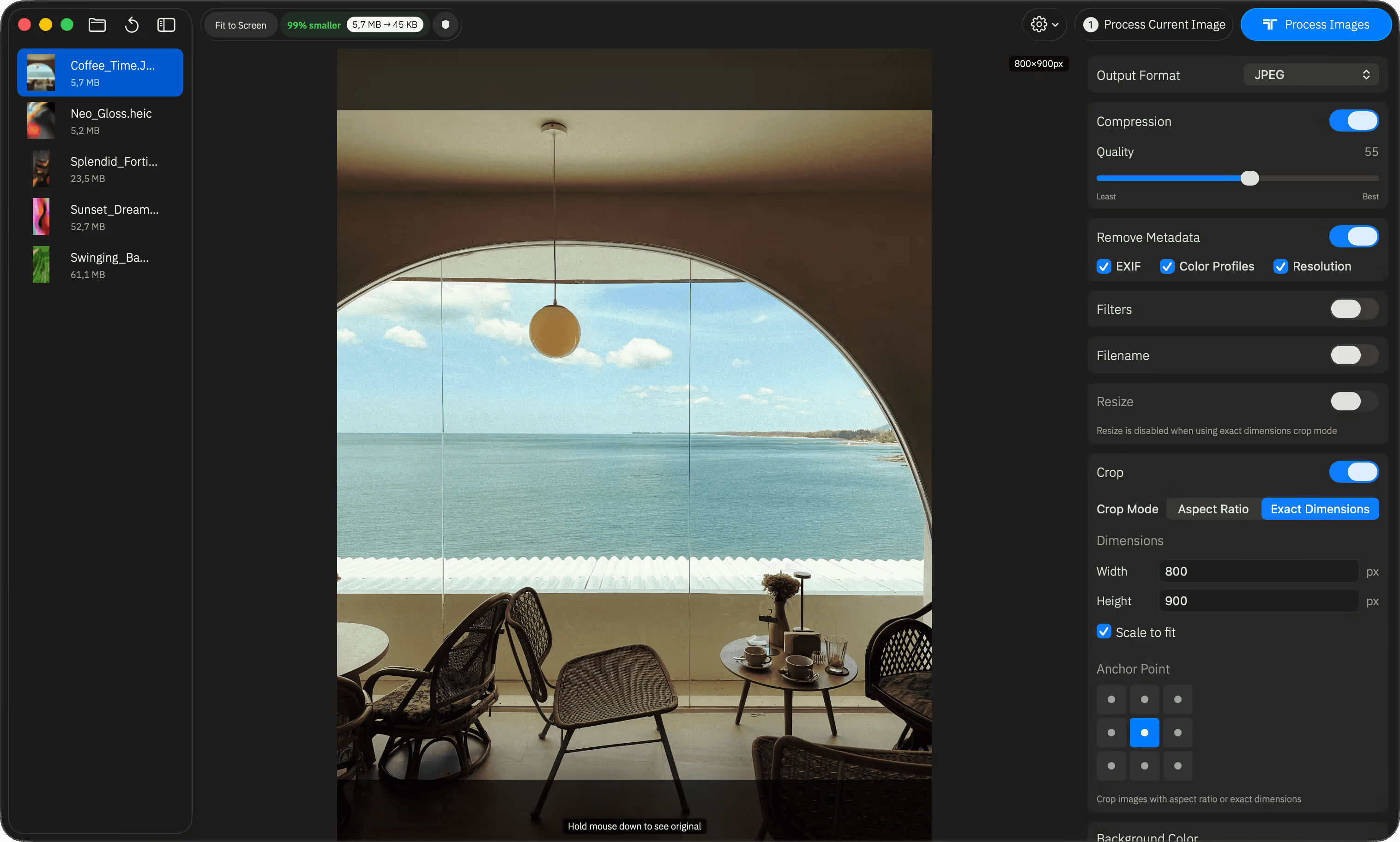
Every GrandWorks project ends at the same step: compress the images. For years we patched this together with whatever was available. Most tools handled one format. Some uploaded files to servers we didn't control. None had any concept of a team licence. TidyImage started as an internal tool. It became a product we sell.
Every GrandWorks project ends at the same step: compress the images. For years we patched this together with whatever was available. Most tools handled one format. Some uploaded files to servers we didn't control. None had any concept of a team licence.
TidyImage started as an internal tool. It became a product we sell.
The Challenge & Solution
The image compression market has plenty of utilities. What it lacks is products. Most tools solve the compression step in isolation - drag in a file, get a smaller file back - without thinking about what comes before or after. No bulk ops for folders of hundreds. No format conversion in the same pass. No team licensing. The time was lost in the workflow gaps, not the compression itself.
We built TidyImage to close those gaps. Bulk processing on-device, format conversion in the same job, output to a configured directory. Around the app, we built the commercial layer: Stripe checkout, server-side licence validation, account management, and team seat provisioning.
On-Device Bulk Compression
Processes large batches of images using native macOS image frameworks, with no files sent to external servers. A folder of 500 assets compresses in the background while other work continues, with progress visible but not intrusive.
Modern Format Coverage
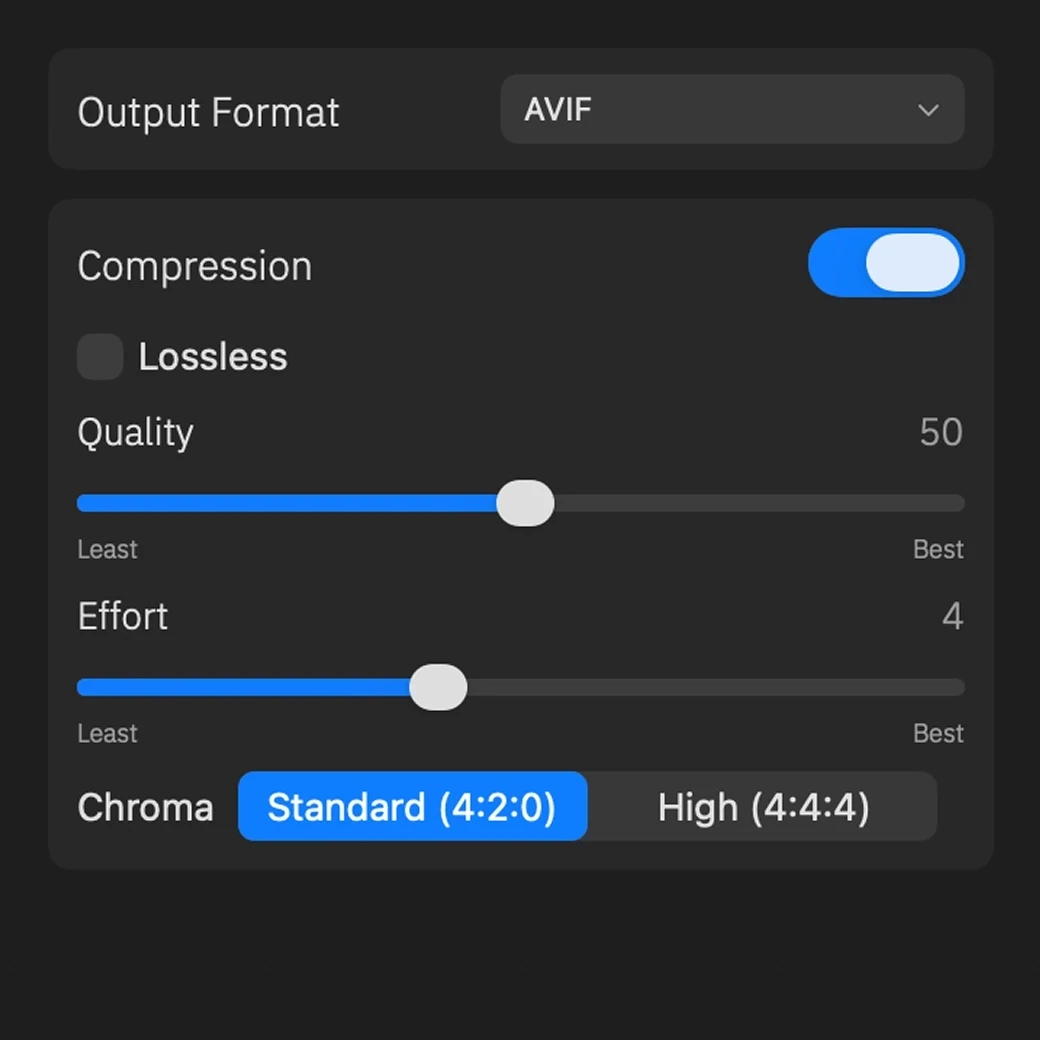
Supports JPEG, PNG, WebP, HEIC, and SVG, with format conversion available as part of the same batch job. A designer can drop in a folder of HEIC exports from iPhone and get a folder of WebP files back in one pass.



Per-Format
Compression Control
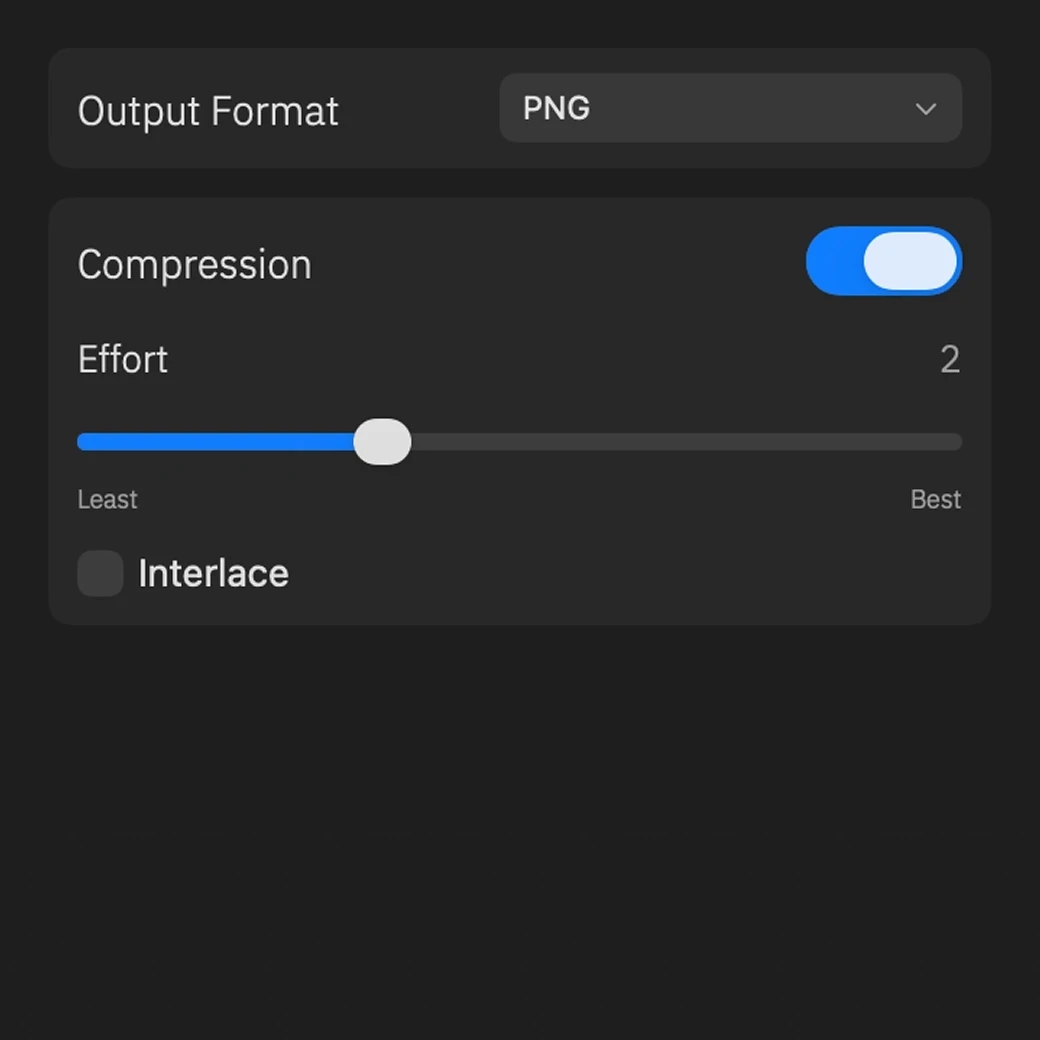
Each format has its own quality slider rather than a single global setting. JPEG and WebP can be tuned independently. The interface shows estimated file size reduction before export, so users can make an informed call without running the job twice.
Stripe Licensing System
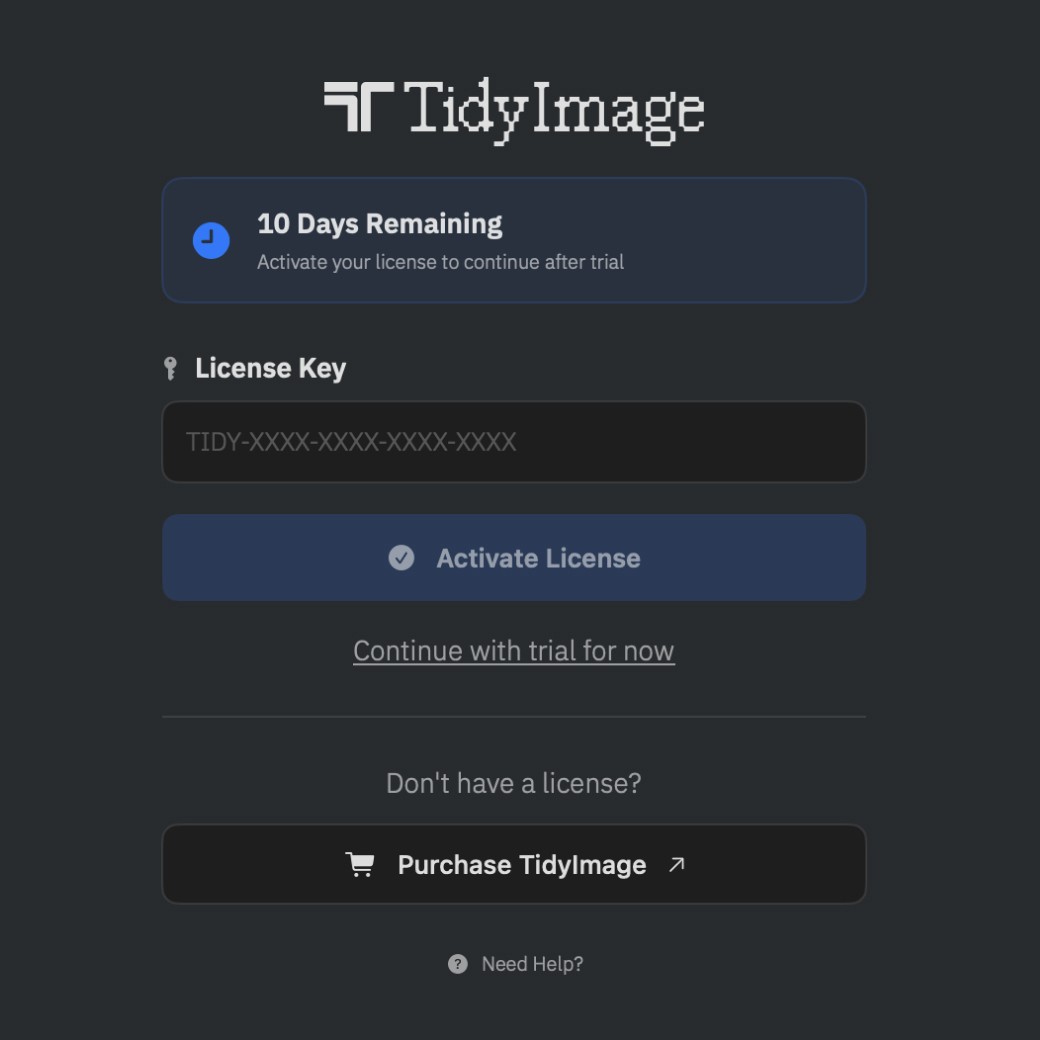
Handles individual purchases, plan upgrades, and renewals through Stripe Checkout. Licence keys are generated server-side on successful payment, delivered by email, and validated on app launch. Webhook handling covers failed payments and subscription changes without manual intervention.
Account & Seat Management
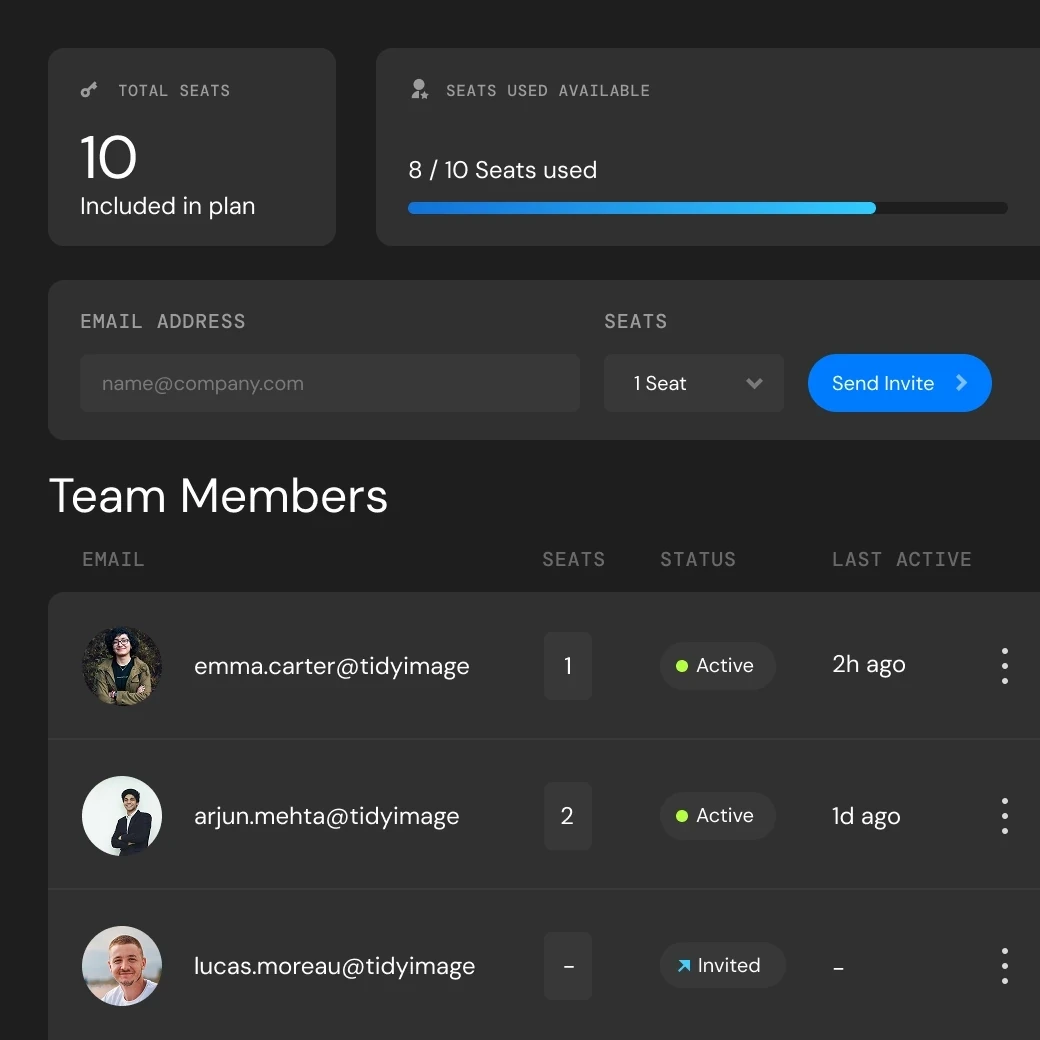
An internal dashboard gives us a view across all accounts, licences, seats, and payment history - built for practical daily use, not for completeness. A team licence covers a defined number of seats under one account; the licence owner invites members by email, and the system provisions access automatically. Seats can be reassigned, with usage tracked per seat, not per device.
Design & UX
TidyImage is used when someone wants to ship assets, not explore features. The interface reflects that: drag and drop is the main action, settings don't demand attention on every run, and progress doesn't block the screen. The same logic applied to the web side. Short purchase flow. Account page shows only what's needed. The design work was mostly about deciding what to leave out.

Technical Implementation
macOS Application
Built in Swift using Apple's native image processing frameworks, CoreImage and ImageIO, rather than third-party codec libraries. Processing stays on-device, which keeps it fast and avoids the privacy and latency issues that come with server-side compression.
Backend & API
A Node.js API handles licence validation, account operations, team seat logic, and Stripe webhook events. Licence checks run at app launch and at intervals during use, with short-lived tokens cached locally to avoid latency on every check.
Stripe Checkout manages the purchase flow. Webhooks handle licence provisioning, renewal, and lapsed payment states. All webhook events are processed with idempotency keys, so retried events don't create duplicate licences or double-charge customers.
Keys are signed server-side and scoped to an account, not a device. The app validates against the API rather than a local key file. Seat assignment is enforced at the account level, so a team licence can't be shared beyond its seat count.