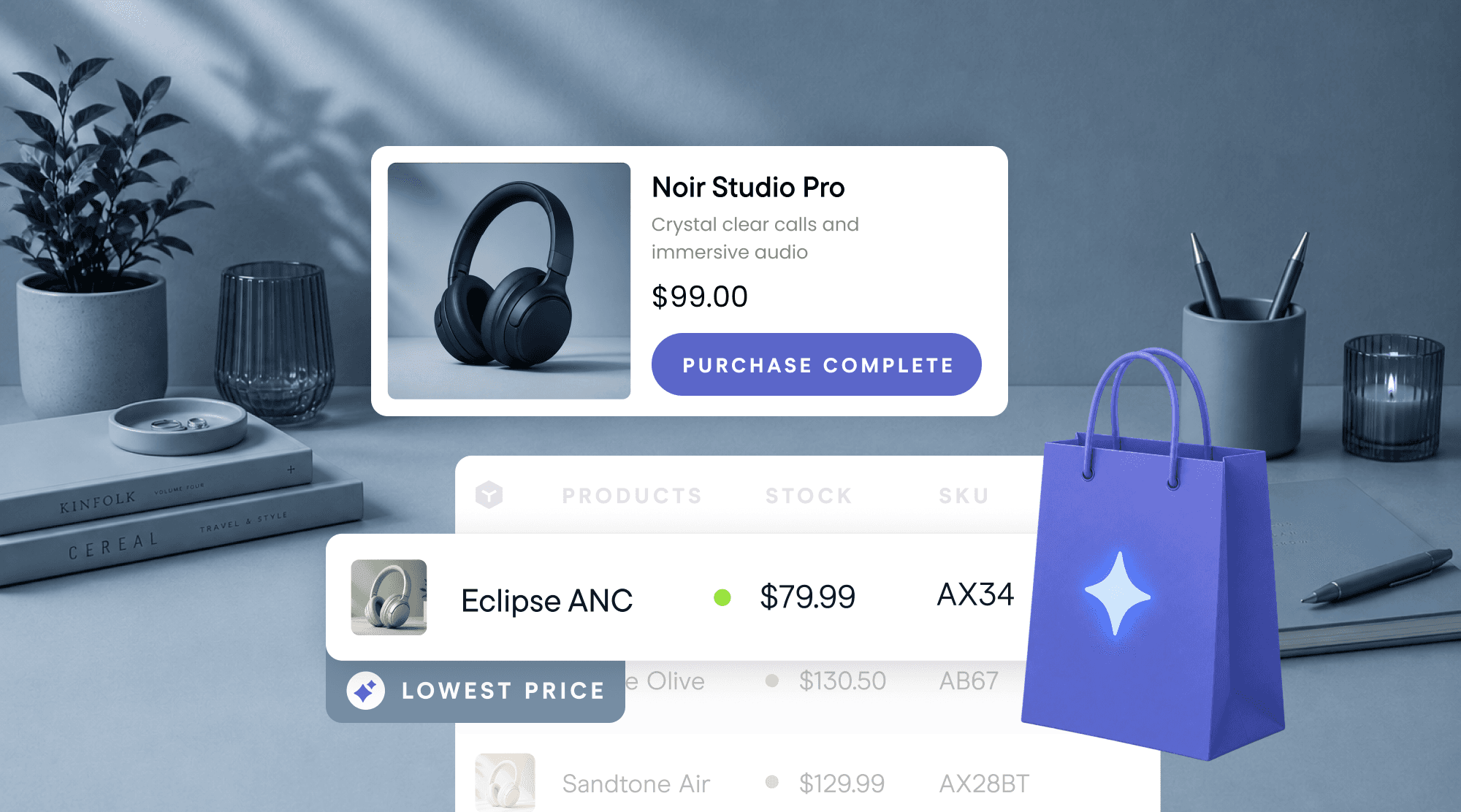
AI for Ecommerce in 2026
The quiet wins that already work
Start with the boring, profitable stuff, because this is where AI earns its keep right now.
Recommendations grew up. Instead of 'people also bought', a store can read a shopper's behaviour and surface products that actually fit, bundle sensible add-ons, and reorder a returning customer's homepage around what they care about.
Search got smarter too. Natural-language and visual search let a customer type 'linen shirt for a beach wedding' or upload a photo and land on the right products, instead of fighting with exact keywords.
Then there's the back office. AI drafts product descriptions from a few bullet points, writes alt text, flags likely fraud, forecasts which sizes will sell out, and handles the first line of support so a person only steps in when it matters. None of this is flashy. All of it saves hours and money.
The big shift: agentic commerce
Here's the part everyone is talking about. AI agents have started doing the shopping themselves.
A customer asks ChatGPT or Gemini for the best running shoe under a budget, gets a shortlist with a buy button, and checks out without ever visiting a store. OpenAI's Instant Checkout has been live in ChatGPT since late 2025, with Shopify, Etsy and Walmart in the mix. Google rolled out agentic checkout across Search and Gemini, with a 'buy for me' button live at selected US retailers. Amazon is now offering the technology behind its own shopping assistant to other retailers. The card networks have built spending limits and consent into agent payments, so an agent can't quietly empty someone's account.
The forecasts are loud. Morgan Stanley expects roughly half of online shoppers to use AI agents by 2030. McKinsey puts the agentic channel at three to five trillion dollars globally by the same year. Whether those exact numbers land or not, the direction is set.
What it means if you sell online
The uncomfortable bit: if an agent can't read your store, it can't recommend your products, and the customer never sees you. The browsing session, the carefully designed product page, the persuasive checkout, an agent skips all of it and talks to your data through an API.
So the work shifts. Clean, structured product data. Accurate pricing and stock a machine can trust. Schema markup and metadata so an assistant understands what you sell. Open standards are forming around this, with Google, Shopify and others pushing protocols that let agents query a store and check out in a consistent way. The stores that get found in 2026 are the ones whose catalogues are legible to software, not just pretty to people.
A dose of realism
It's early, and it shows. The first big in-chat checkout rollout shipped with only a fraction of the promised integrations actually built. The honest read from analysts is that nobody has cracked it yet, but the fear of missing out is universal, so everyone is rushing to market. Worth remembering before you rebuild your whole stack around a button that's live at a handful of retailers.
Our take is simple. The agent stuff is real and worth preparing for, but don't bet the business on it this quarter. Spend now on the things that pay off either way: clean product data, fast pages, a store that works on a phone, and support that doesn't make people want to throw the phone across the room. That groundwork is exactly what an AI agent needs to recommend you anyway. The hype and the fundamentals point the same way for once, which doesn't happen often.
If you want help getting a store ready for this, that's the kind of work we do.

Team
Let’s explore how we can bring your ideas to life.
See how we’ve transformed ideas into success stories