An Introduction to Colour Theory
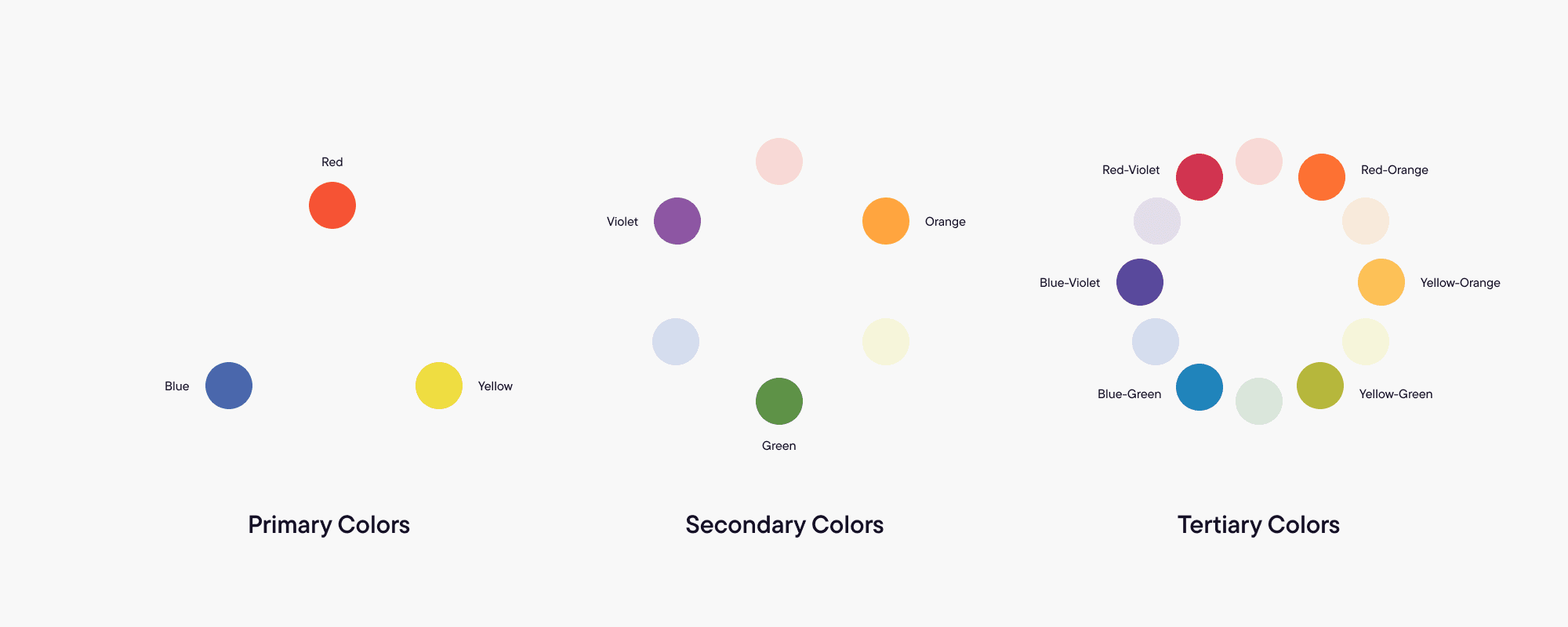
It all starts with the colour wheel. Most schemes are just a way of choosing points on it.
Primary colours are the three you can't mix from anything else: red, yellow and blue. Everything else is built from these. Mix two primaries and you get a secondary: red and yellow make orange, yellow and blue make green, red and blue make purple. Sit a colour between a primary and a secondary and you get a tertiary, like red-orange or blue-green. There are six of those, and a lot of real palettes live right there.
That's the raw material. The interesting part is how you combine it.
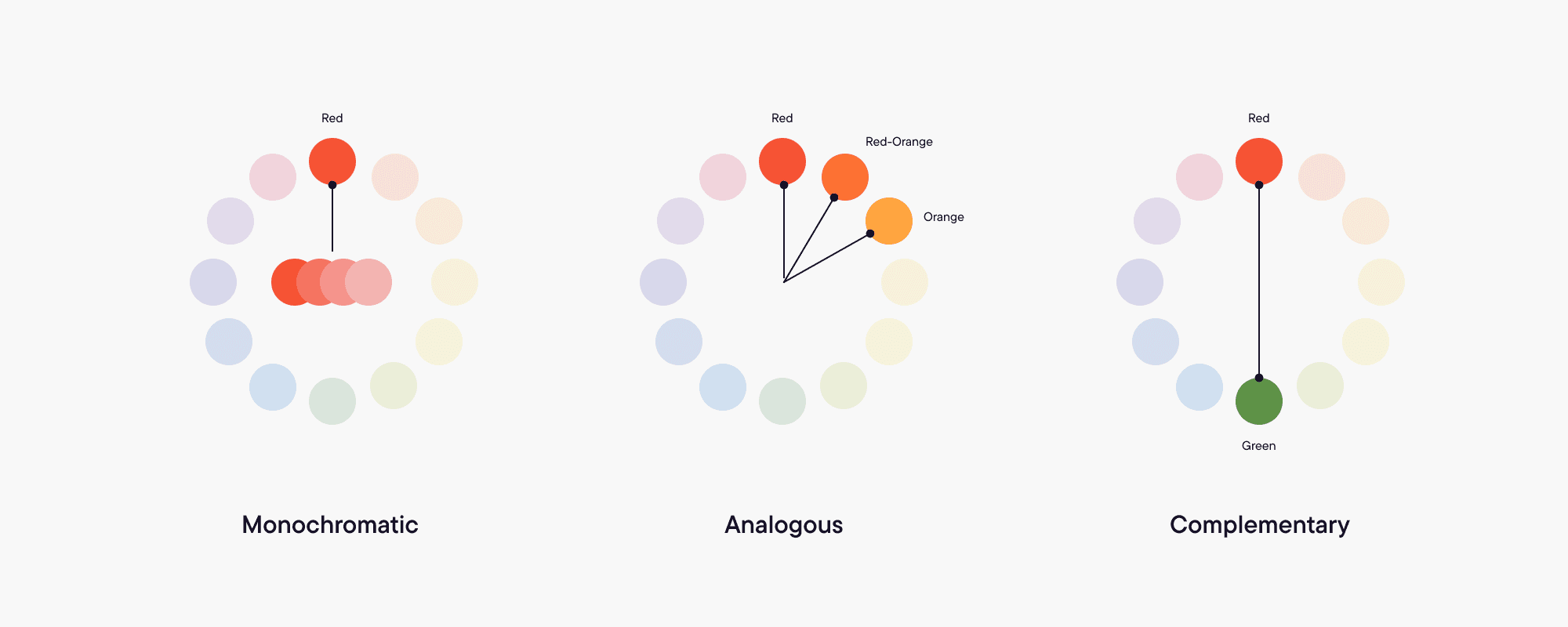
A monochromatic scheme uses a single hue stretched into tints, tones and shades. Add white for a tint, grey or black for a shade. It's calm and hard to get wrong, which is also why it's easy to make boring.
Analogous schemes use three colours sitting next to each other on the wheel, like red, red-orange and orange. They share a root, so they sit together comfortably. People sometimes call them old-fashioned, but used well they're some of the easiest palettes to live with.
Complementary colours sit opposite each other, like red and green. Place them side by side and you get the strongest contrast there is. Mix them and they cancel into grey. Reach for them when you want one thing on the page to shout.
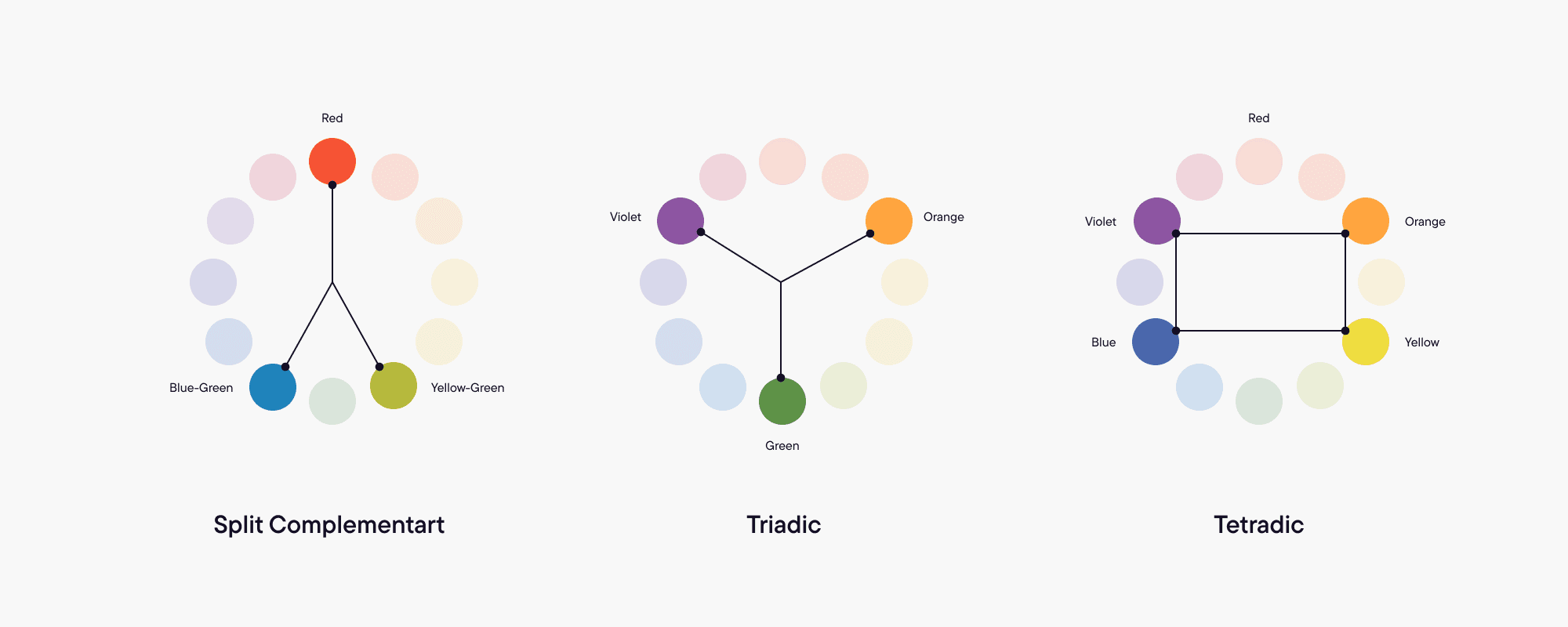
Split complementary takes a colour, finds its opposite, then uses the two colours either side of that opposite instead. Red with blue-green and yellow-green, for example. You keep most of the contrast and lose some of the tension.
A triadic scheme uses three colours evenly spaced around the wheel. Red, blue and yellow is the classic; orange, purple and green is the other. Balanced and lively at the same time.
Tetradic schemes use four colours, two complementary pairs. They're loud and fun and very easy to overdo. Let one colour lead and the other three support, or you'll wear the viewer out.
None of this tells you which palette is right for a given project. That part is judgement. But knowing the schemes gives you somewhere to start other than scrolling through swatches hoping one clicks. Pick a base colour that fits the brand, decide how much contrast the design needs, and the wheel narrows things down fast.

Team
Let’s explore how we can bring your ideas to life.
See how we’ve transformed ideas into success stories